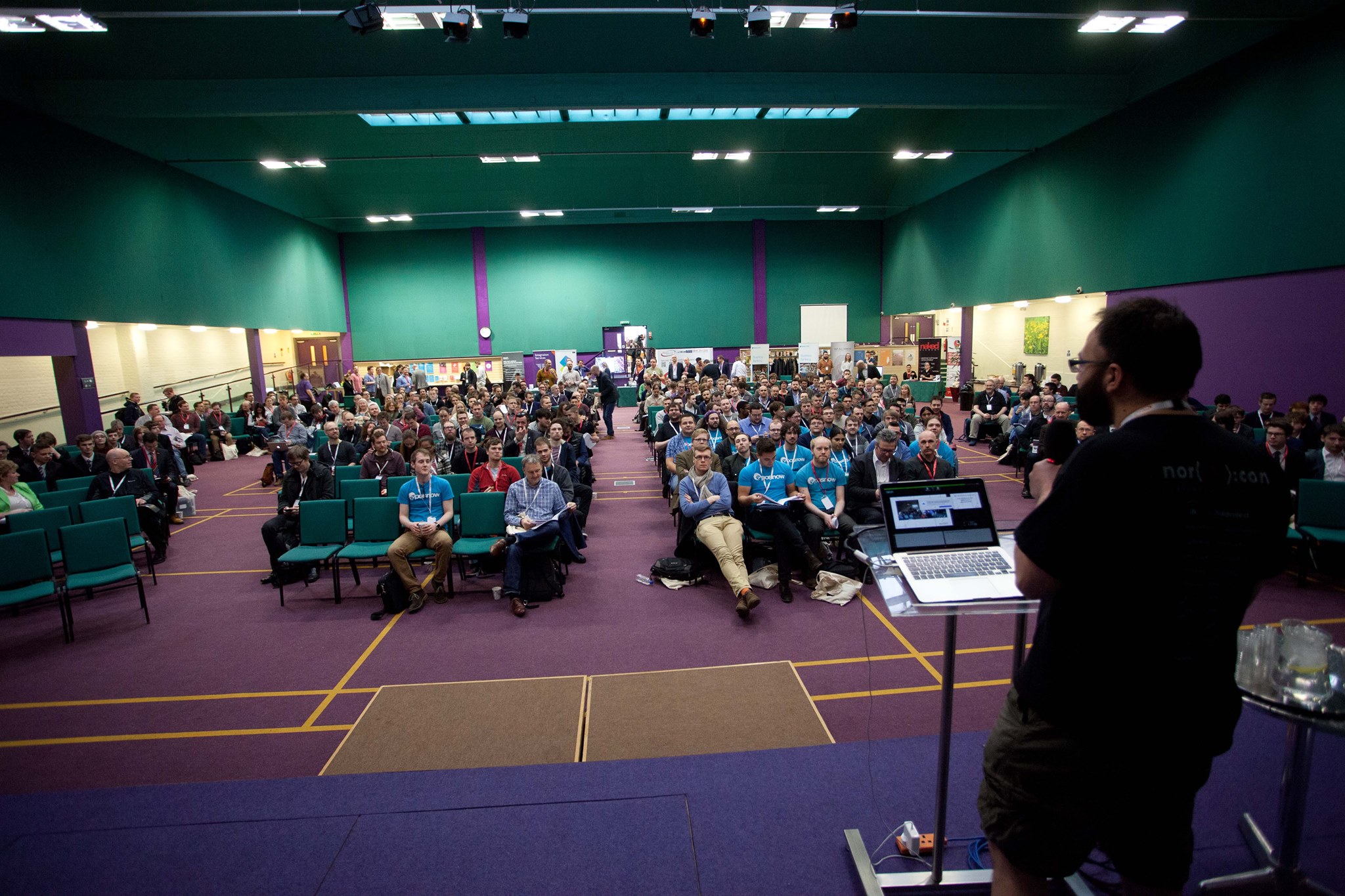
Where
Find me at upcoming events and conferences
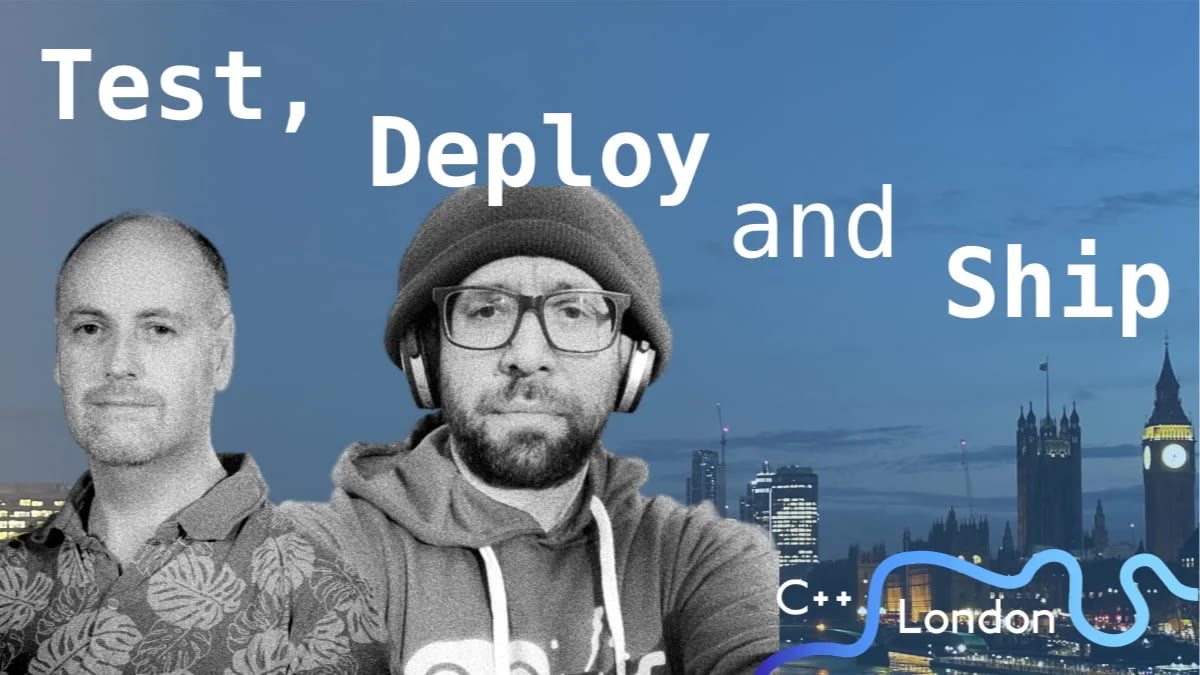
C++ London: Test, Deploy and Ship
Speaking
An evening with two talks. Phil Nash asks whether decades of advocating for TDD and testing practices still matter in an age of AI, and if so, how to apply them most effectively.I'll be giving From Zero to Deployed: Building and Shipping an AWS Lambda with TypeScript, Terraform & GitHub Actions, a practical talk covering writing and packaging a TypeScript Lambda, provisioning infrastructure with Terraform, automating deployment with GitHub Actions, and lessons learned from using Lambdas. It's aimed at newcomers to AWS or serverless and emphasises version-controlled, repeatable deployments.Doors open at 18:30.
Attending
ACCU London: How Engineering Skills Actually Improve in 2026 - by Meri Williams
An ACCU London meetup built around two formats. The first is 10-minute private quick swap 1:1 chats with senior experts, like musical chairs, where attendees can ask questions confidentially without group pressure. The second invites participants to submit problems or questions, which guide future session topics or connect them with volunteer mentors.The evening includes a keynote by Meri Williams (ex-CTO at Monzo and Pleo) on how engineering skills develop, with actionable advice for supporting peers at all experience levels.
Hosting
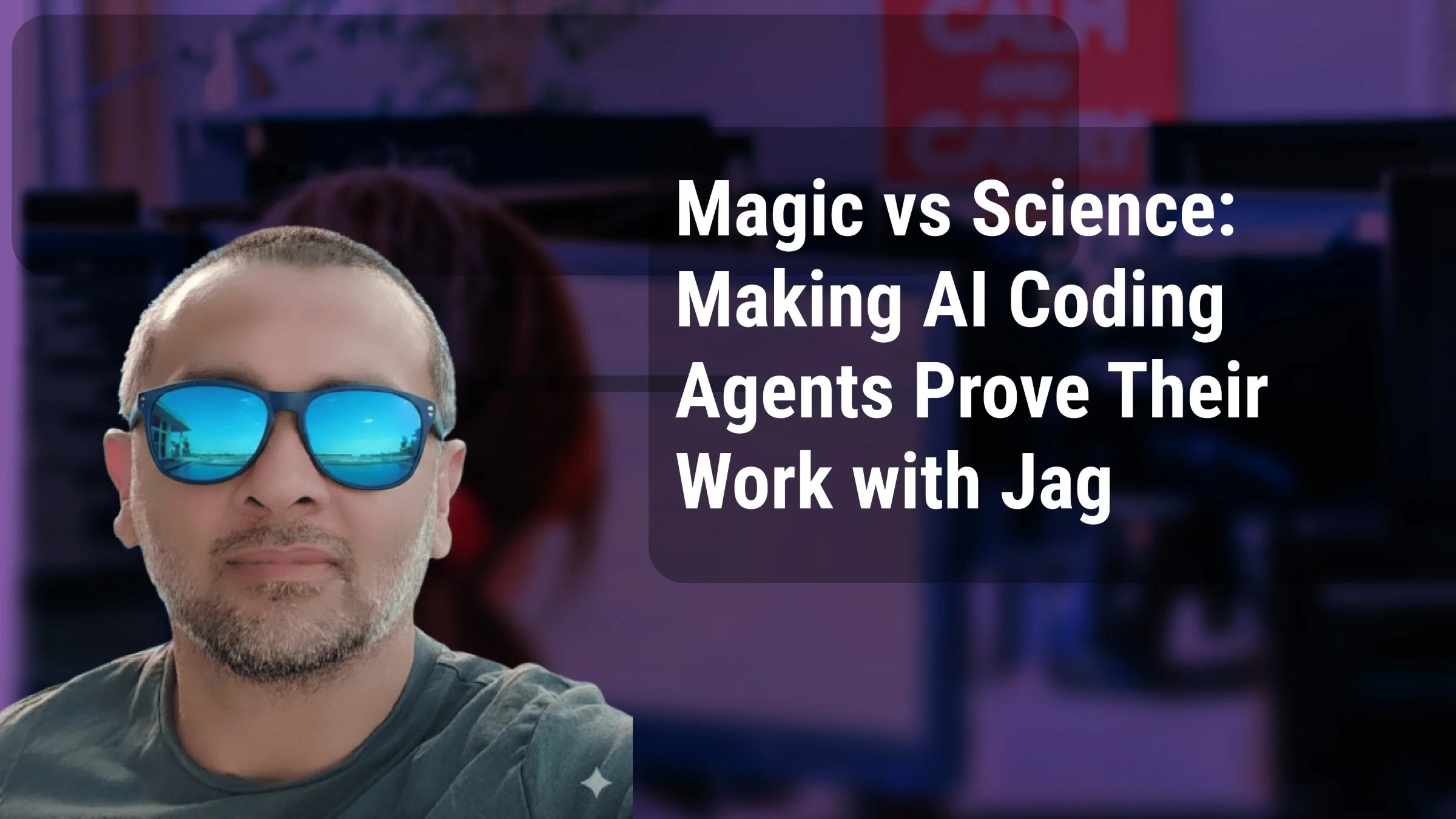
Magic vs Science: Making AI Coding Agents Prove Their Work with Jag Reehal
Prompt tricks, agent skills and the latest witchcraft only get you so far. In this talk Jag Reehal moves beyond them to show how engineering practices can make AI-generated code prove itself. Jag covers and demos the steps you can take to build quality, maintainable and observable solutions when coding with AI.Jag ReehalJag is a Principal AI Engineer based in Cambridge, with certifications in AI and AWS and over 20 years of experience architecting scalable front-end and back-end systems for both startups and large enterprises. Jag's LinkedInThere is also a book giveaway from Packt, with copies of The Principal Engineer Handbook, Enterprise Vibe Coding for Agentic Engineering and Distributed AI Systems to be won.
Hosting
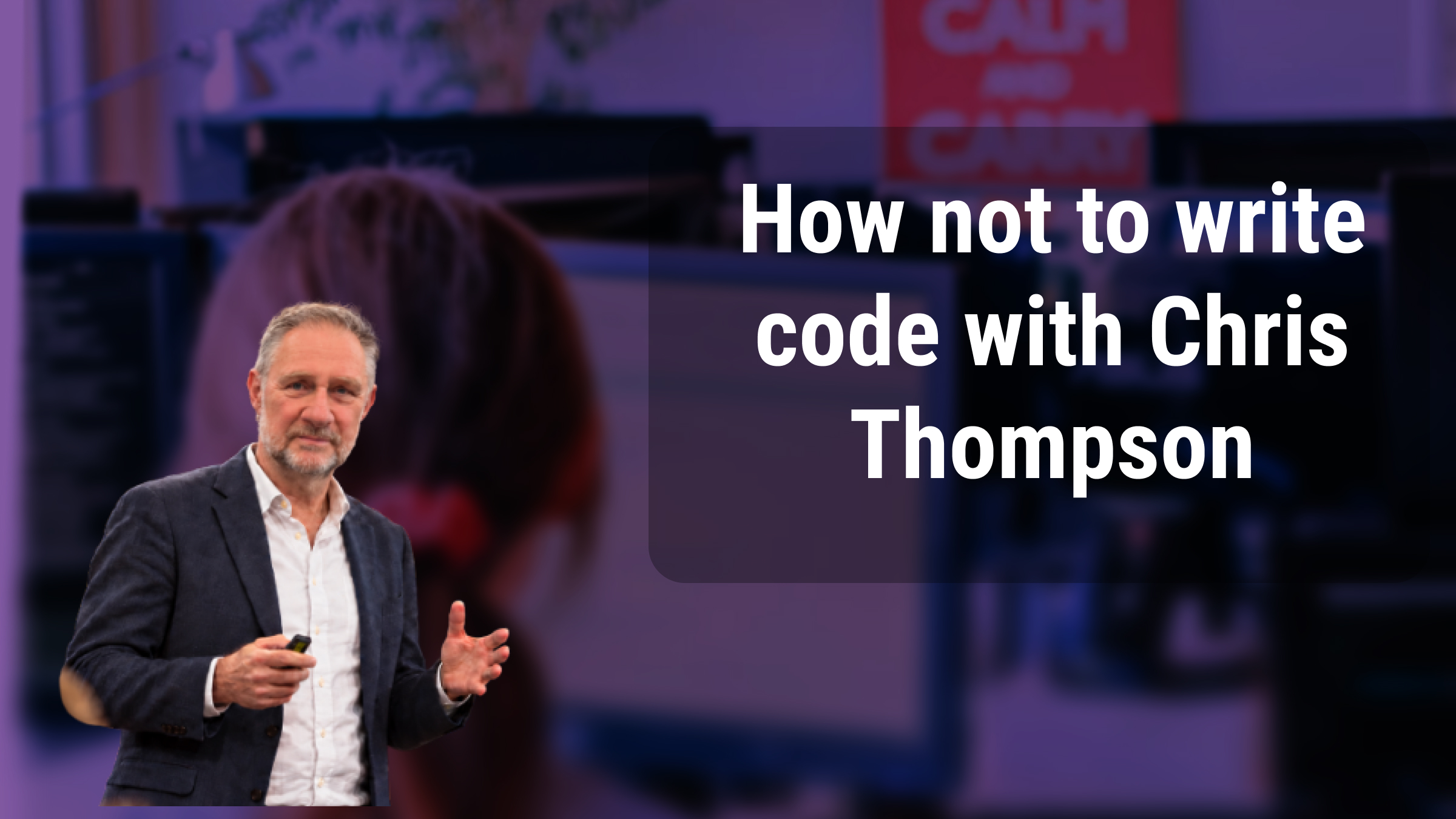
How not to write code with Chris Thompson
A talk on AI-assisted coding, specifically porting the Lukashian calendar from Java to Dart.Chris ThompsonChris has decades of software development experience, including embedded systems, enterprise IT and commercial software products. He has led global engineering teams and helped deliver large-scale engineering tools, agile development programmes and cloud-based IoT solutions. Since leaving IBM he has explored mobile app development with Flutter and Dart, and he recently published his first open-source project, which is the subject of this talk.
Speaking
Talk with Paul Grenyer
An in-person talk with Paul Grenyer for dotnetsheff. Topic to be announced.Pizza and drinks from 18:15, introduction at 18:30, followed by the talk, with socialising at a nearby pub afterwards.

Hosting
High-Performing Teams & Architecture with Diana Nanuti
Two talks from Diana Nanuti.Burnout: The Hidden Failure Mode of High-Performing TeamsBurnout in high-performing engineering teams is a systemic design flaw, not a lack of individual grit. Applying SRE principles such as load shedding, redundancy and leading indicators to team health, this talk covers why idle capacity supports performance, how to make cognitive load visible, and how to avoid hero culture.Designing for Change: How Domain-Driven Design and Hexagonal Architecture can help systems evolveUsing a concrete example, this talk shows how Domain-Driven Design and Hexagonal Architecture help software evolve as products grow:
- How clear domain boundaries make systems easier to understand and change
- Ways to structure software so products can evolve without rewrites
- How architectural boundaries reduce the risk of adopting new technologies
- Techniques for reducing lock-in to frameworks, cloud providers or platforms
- Common early design choices that make change harder later
Past Events
Hosting
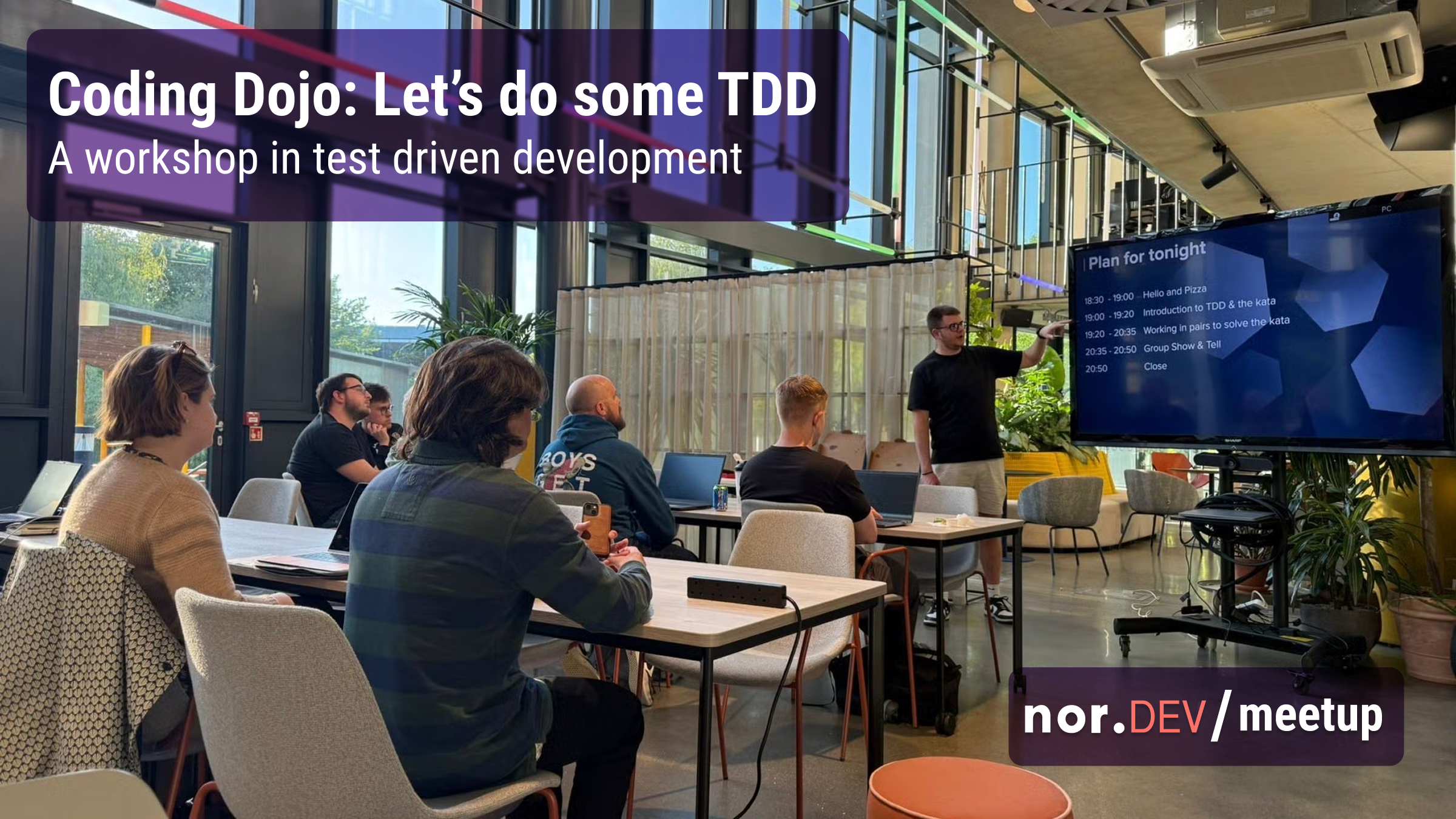
Coding Dojo: Let's do some TDD!
In October we have an extra meetup and we are hosting a fun Coding Dojo where you'll practice your Test Driven Development software engineering skills - a key skill for Software Crafters that care about producing quality code.Join us for an evening of coding. Come and code along, share ideas, discuss best practices with Test Driven Development and learn from our expert Crafters and your peers in the Norfolk Developers community.What's the format?After a short intro, we'll get into groups/pairs or work solo, whatever people feel most comfortable with, and start building.You choose how you want to work and what language you want to code in. This session is about collaborating with others, becoming a better developer and building your network, in a fun, relaxed environment.We'll be sharing ideas, discussing best practices and using this as an opportunity to learn from our fellow coders.All levels of experience very welcome, if you want to brush up on your Test Driven Development skills or are a complete novice, do come along. All welcome! All you need to do is bring a laptop if you'd like to code along - please have your preferred language and editor setup.Want to bring a friend? Great! Just ask them to RSVP so we know they are coming.
![nor(DEV): Wander [Eaton Park]](/img/nordev-wander-eaton-park-2026-10-14.jpg)
Attending
nor(DEV): Wander [Eaton Park]
Let's wander around the park and chat about tech & life! Come rain or shine, and we'll be walking at 6:30pm!Bring a dog, your significant others, kids, a friend and your face! Join our friendly group for some healthy activities!Our current walk is Eaton Park & UEA Lakes, a 3-mile walk at an all-inclusive pace!
Speaking
JezCon1
"JezCon-1. I’ve already talked about not going to the ACCU Conference this year, and I am not the only one in my circle to have made that decision. It’s the topic of much discussion, some of it quite difficult, but in the middle of that Paul (that's me!) suggested we get together somewhere for dinner. "We are geographically dispersed so we’d all have to travel. I was game, but said I would need more notice, probably months of it. Then conversion just took off. Suddenly we were looking at big AirBnbs and plotting a conference of very own. "Since this was apparently my idea (or my fault, I suppose), it’s been dubbed JezCon. We’ve got a logo and everything. JezCon-1. It’ll be taking place in the fine Metropolitan Borough of Dudley in October."
- Jez Higgins, Jezuk
Hosting
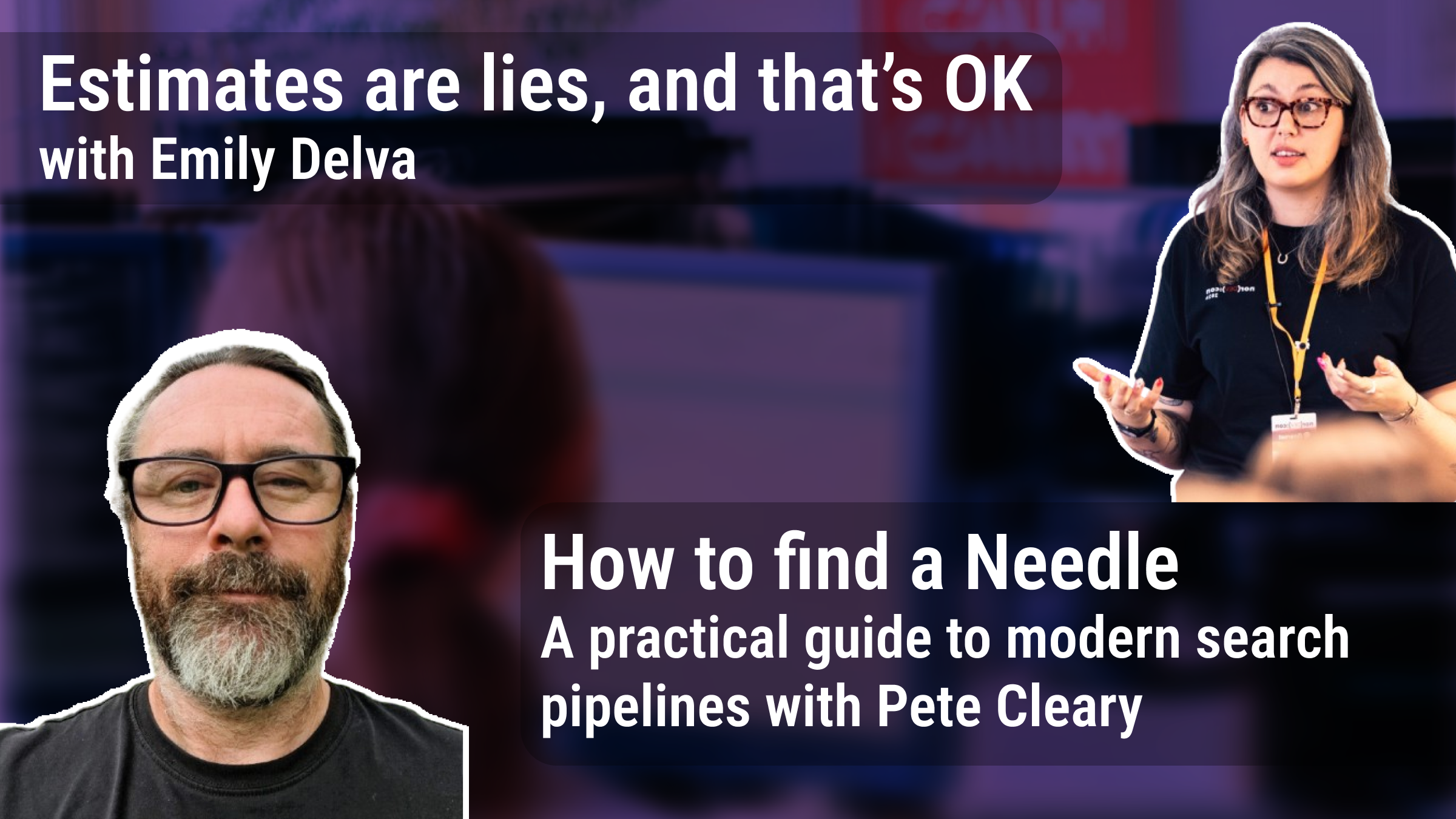
Estimates are lies, and that's ok & How to Find a Needle
A double-header evening with two talks.18:30 - Arrival19:00 - How to Find a Needle19:45 - Break20:00 - Estimates are lies, and that's ok20:45 - ConclusionEstimates are lies, and that's okWhy do estimates so often miss the mark? Let's talk about why that is, what we can do about it and why it isn't the end of the world.Emily DelvaEmily is an Operations Manager with seven years in the technology sector. She studied wildlife conservation and metagenomics before transitioning into digital product and SaaS environments.Emily's LinkedInHow to Find a NeedleA practical guide to modern search pipelines and how you can implement them today.Pete ClearyPete is a software architect with over 25 years building digital products. He has founded two successful technology companies and worked for Visa Inc. His current focus is the opportunities and challenges of AI: building practical systems and applying the technology responsibly, with a particular interest in using AI for the greater good.Pete's LinkedIn
Hosting
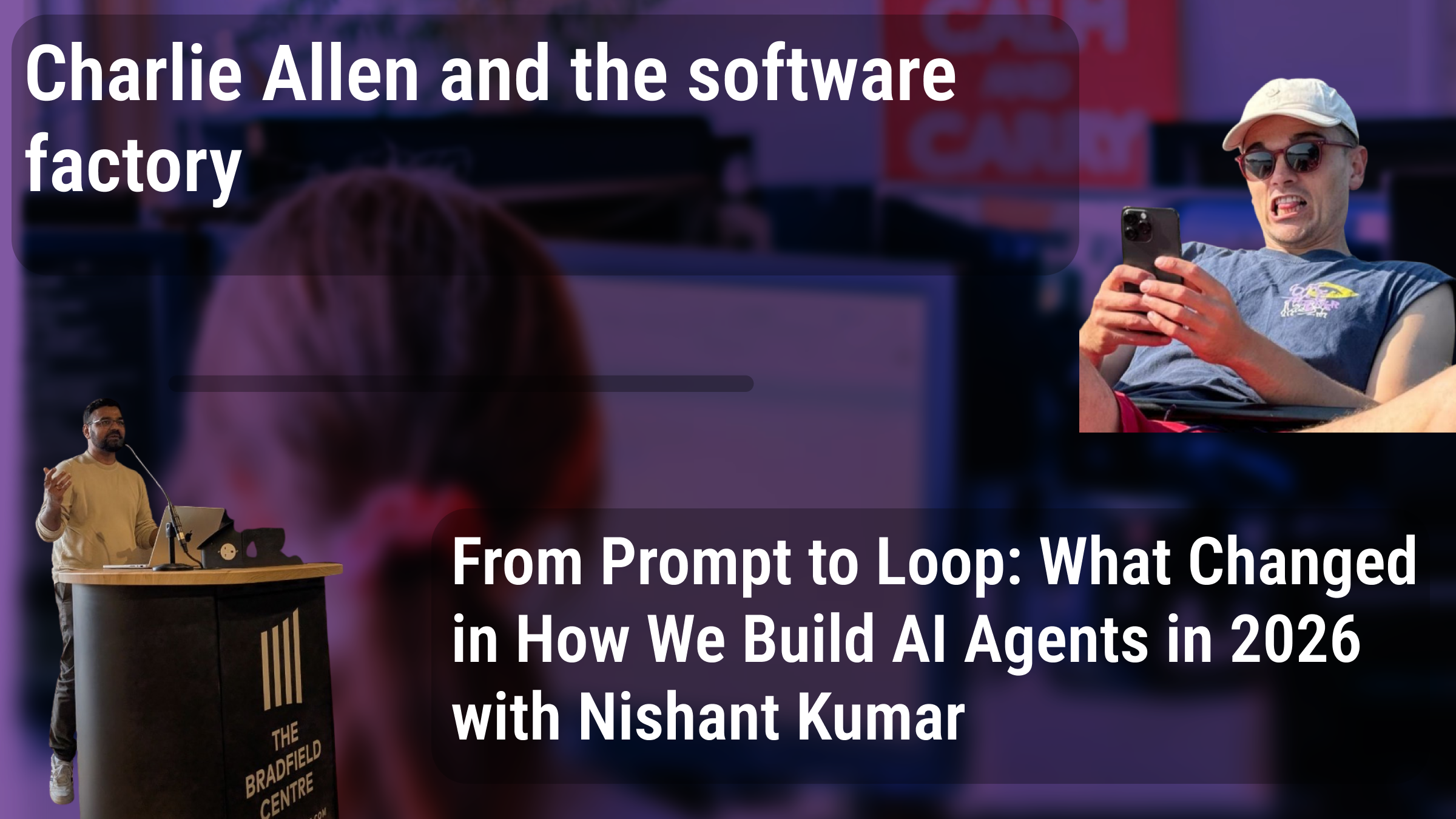
Charlie and the Software Factory & From Prompt to Loop
A double-header evening with two talks.Charlie and the Software FactoryEveryone wants a golden ticket: a software factory that turns ideas into secure, production ready software on demand. The newest factories run themselves. AI agents plan the changes, write the code, review each other's work, and iterate, with hardly a human on the factory floor.In this talk, we'll take the full tour. We'll see where the humans now stand. We'll meet the Oompa Loompas of the modern factory: the agents doing the work, and the paved roads, conventions, and written-down knowledge they depend on. We'll confront the Willy Wonka problem. And we'll visit the kids who didn't make it out: the common ways an AI-powered factory go wrong, and how to avoid becoming a cautionary tale.Charlie AllenCharlie has an unconventional background, moving from legal training into tech, teaching English in Korea, and co-founding a chai business before joining Amazon Alexa's AI organisation, where he deployed a production NER model. He was named the British Computer Society's Digital Degree Apprentice of the Year, later led infrastructure recovery at Darktrace, and went solo in 2026 to build agentic AI systems full-time from Norwich.Charlie's LinkedInFrom Prompt to LoopA practical guide to AI agent development, walking through four evolutionary stages: prompt engineering, context engineering, harness engineering, and loop engineering. Includes concrete examples using Claude Code and agent verification techniques.Nishant KumarNishant's LinkedIn
Speaking
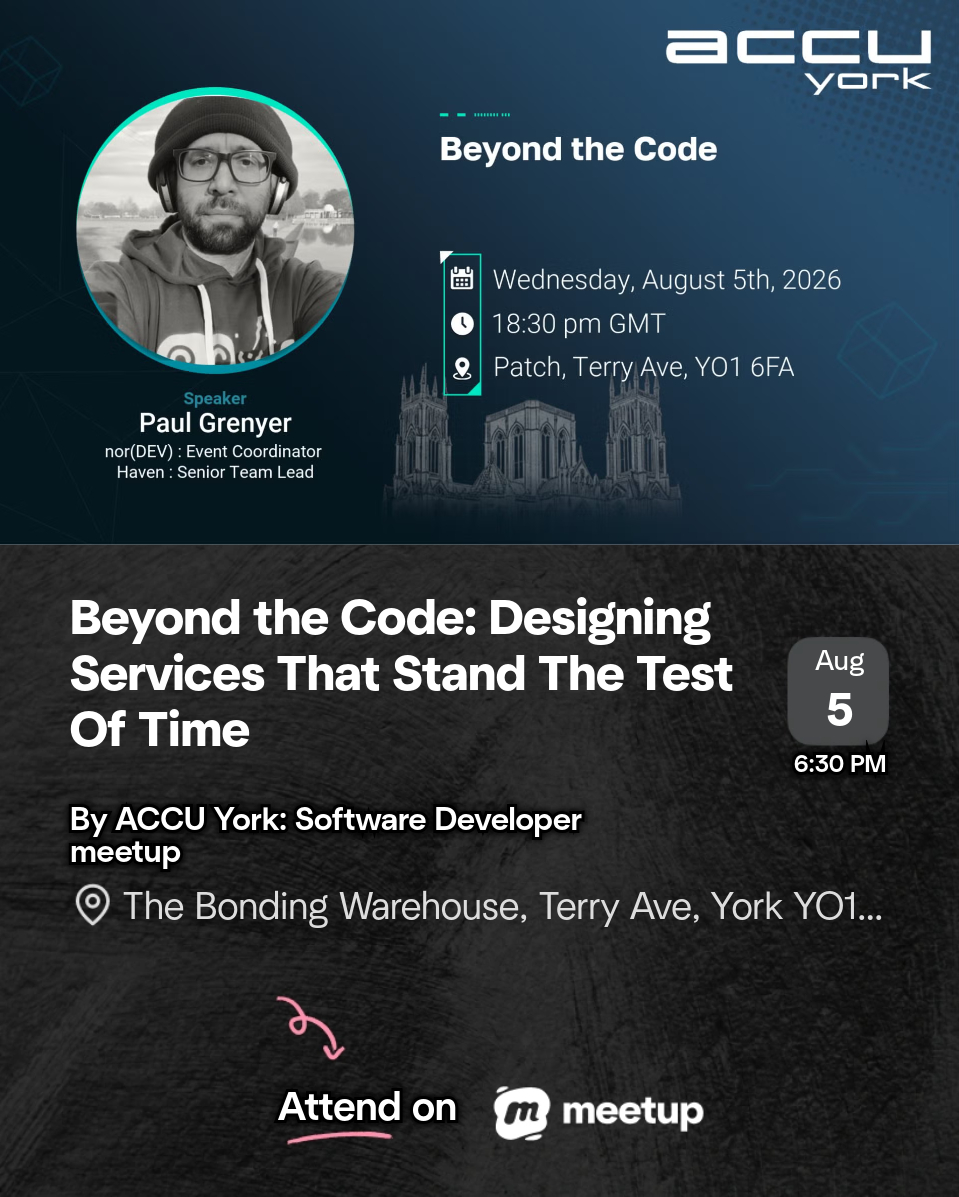
Beyond the Code: Designing Services That Stand the Test of Time
As software engineers, it's easy to get lost in the excitement of implementing clever business logic: the algorithms, the workflows, the elegant domain models. But the success (or failure) of a service rarely hinges on its core logic alone. What really separates a fragile prototype from a resilient, scalable system is everything that happens around that logic: the invisible scaffolding that shapes how a service behaves, communicates, and recovers when things go wrong.In this session I'll explore the often-overlooked aspects of building robust services. The decisions that make the difference between smooth operations and painful refactors months down the line. I'll unpack how thoughtful design choices early on can pay dividends in maintainability, observability, and security later. Whether you're building your first microservice or managing an ecosystem of services, you'll leave with practical ideas for designing services.Key Takeaways:
- Why the non-domain aspects of a service are often what determine its long-term success
- How to think holistically about design, structure, and reliability
- Strategies for evolving your services without introducing chaos
Attending
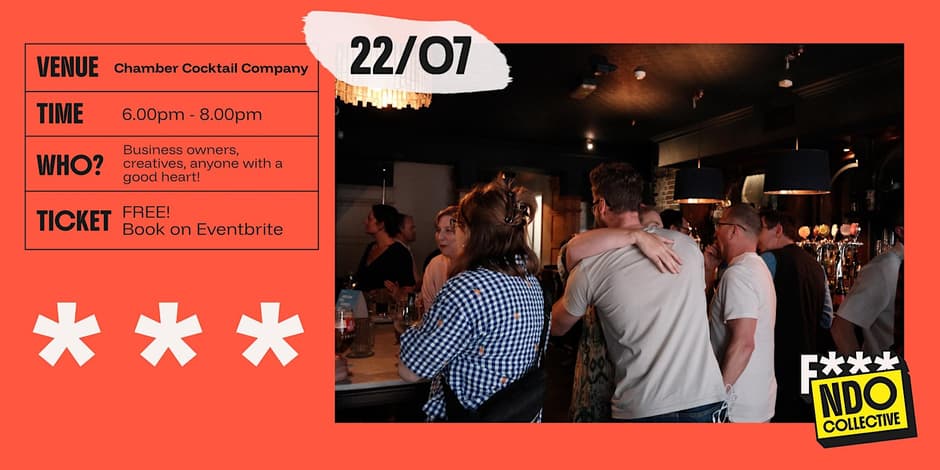
FNDO Networking Event - Panel with Chloe Rogers
An informal networking occasion from FNDO Collective designed for creative professionals, independent contractors, and business owners. It avoids traditional networking conventions like rehearsed elevator pitches and forced interactions, offering a chilled, pressure-free space to connect with fellow independents.The event features a short panel session (30 minutes max) with digital marketing expert Chloe Rogers from Pink Lemonade, where attendees can ask questions directly. Includes genuine conversation among peers building their own ventures and a goodie bag. Spots are limited.
Speaking
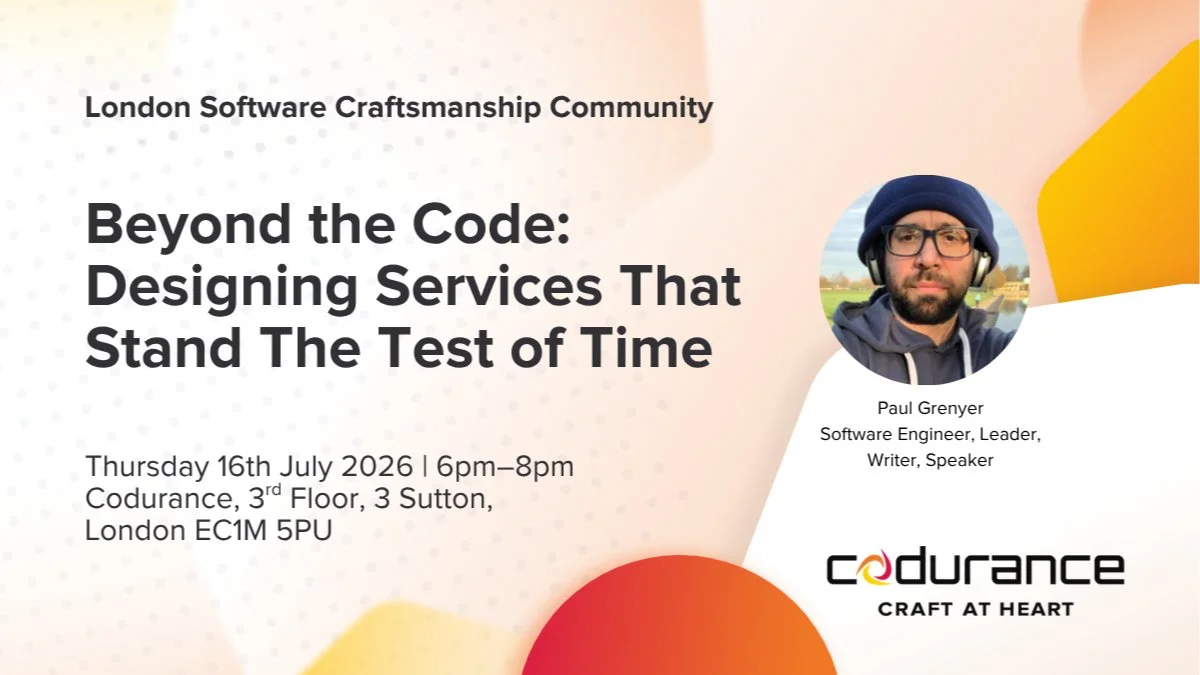
Beyond the Code: Designing Services That Stand the Test of Time
As software engineers, it's easy to get lost in the excitement of implementing clever business logic: the algorithms, the workflows, the elegant domain models. But the success (or failure) of a service rarely hinges on its core logic alone. What really separates a fragile prototype from a resilient, scalable system is everything that happens around that logic: the invisible scaffolding that shapes how a service behaves, communicates, and recovers when things go wrong.In this session I'll explore the often-overlooked aspects of building robust services. The decisions that make the difference between smooth operations and painful refactors months down the line. I'll unpack how thoughtful design choices early on can pay dividends in maintainability, observability, and security later. Whether you're building your first microservice or managing an ecosystem of services, you'll leave with practical ideas for designing services.Key Takeaways:
- Why the non-domain aspects of a service are often what determine its long-term success
- How to think holistically about design, structure, and reliability
- Strategies for evolving your services without introducing chaos
Attending
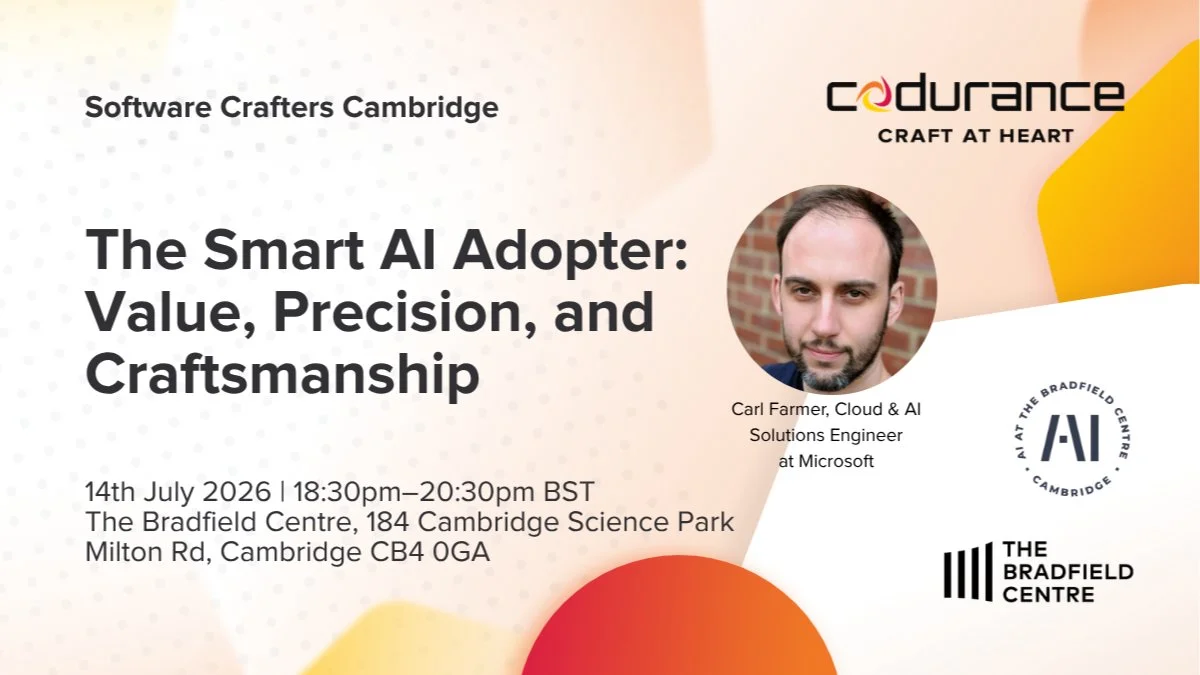
The Smart AI Adopter: Value, Precision & Craftsmanship
Carl Farmer, a Cloud and AI Solutions Engineer from Microsoft, leads an interactive three-part session exploring responsible AI adoption. The presentation covers measuring genuine ROI, optimizing token costs through context management, and emphasising software craftsmanship practices like test-driven development as safeguards against technical debt.Part 1: Measuring Real ROI in the AI EraPart 2: Maximizing Context, Minimizing CostPart 3: Quality and the Human-in-the-LoopNon-hands-on, interactive discussion (no laptops needed). All experience levels welcome. Pizza and drinks provided by Codurance (vegetarian/vegan options available).
Hosting
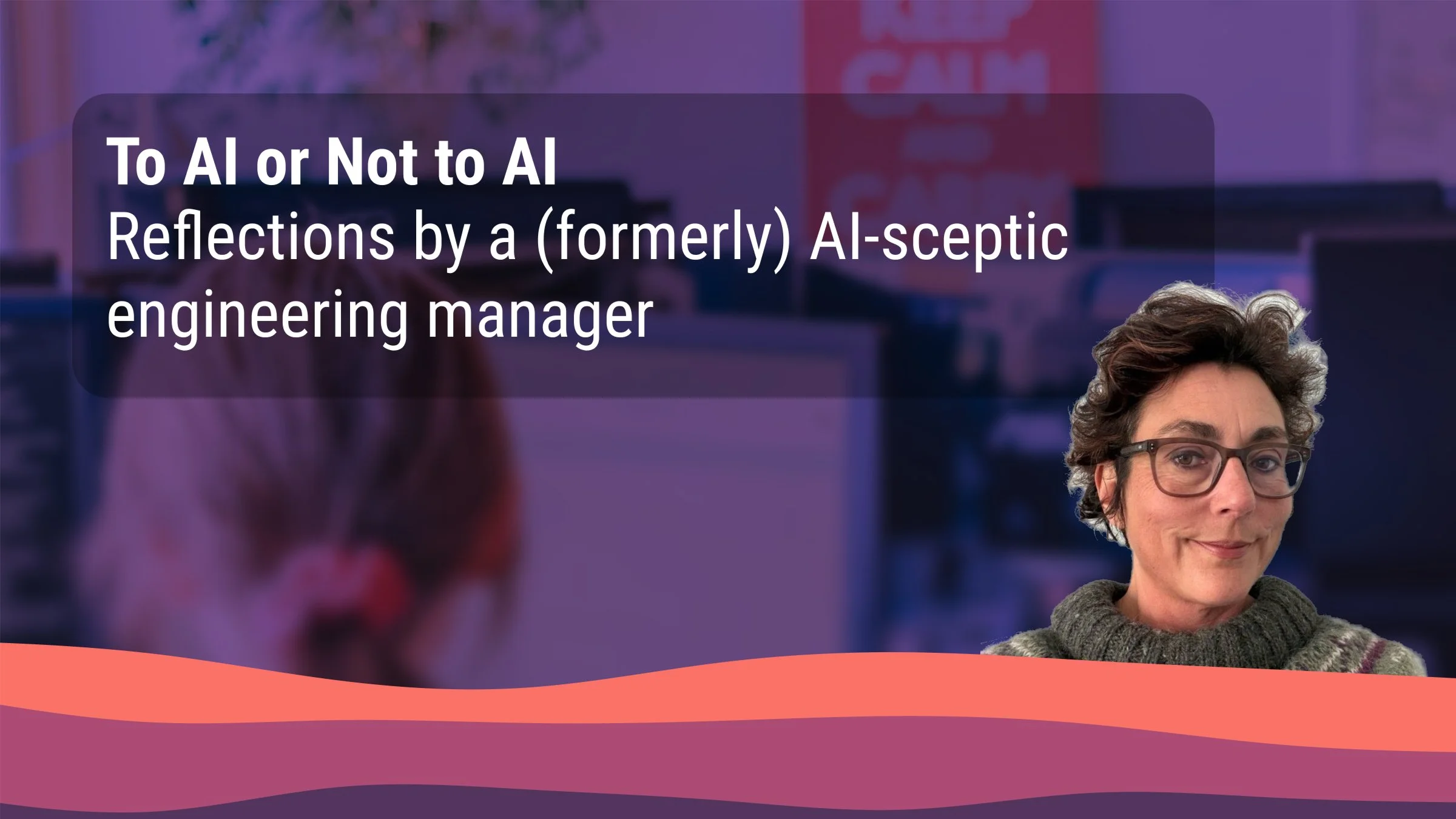
To AI or Not to AI with Kicki Frisch & AI for Power BI Professionals with Duncan Boyne
To AI or Not to AI - Kicki FrischHow do you use AI sustainably in development, avoid the hype, and set healthy expectations? This talk isn't about agentic AI or prompting techniques. Instead, it examines developer psychology and behavioural patterns to help teams leverage AI to reduce cognitive load rather than increase it.Kicki FrischKicki is a senior engineering manager in Investment Risk at a global asset management company in London. Her technical background spans C++, C#, .Net, and Python development, with experience across FinTech, medical devices, and structural engineering. She specialises in enabling high-functioning agile teams to deliver quality products.Kicki's LinkedInAI for Power BI Professionals - Duncan BoyneA practical demonstration of AI workflows for Power BI developers covering DAX generation, logic validation, documentation, design, debugging, and stakeholder communication using various AI tools.Duncan BoyneDuncan is a Power BI specialist and CPiO consultant. He founded the Norfolk Power Platform User Group and co-founded the East of England Power Platform Summit.Duncan's LinkedIn

Speaking
AI in Action: How Businesses are Successfully Adopting AI
Join One Beyond and guest speakers from Haven Holidays and Luxury Car Hire for an exclusive webinar sharing their first-hand experiences of adopting AI, the benefits they've achieved, and the lessons learned along the way.In this session, you'll learn:
- How Haven Holidays and Luxury Car Hire are using AI to improve operations and customer experiences
- The business benefits and ROI they've realised from their AI investments
- How they approached selecting the right AI models and technologies
- Common challenges encountered during implementation
- Practical advice on avoiding the most common AI adoption pitfalls
- Key considerations for organisations starting or expanding their AI journey
- Learn from organisations successfully using AI today
- Understand how to evaluate and select AI solutions for your business
- Avoid common mistakes that can slow down or derail AI initiatives
- Tim Fay, Host, One Beyond
- Paul Grenyer, Software Engineering Team Lead, Haven Holidays
- Martin Henderson, Head of Operations, Luxury Car Hire
- Vic Tabram, Head of Product, One Beyond
Speaking
It Didn't Work...and I'm Not Entirely Sure Why
Most business talks are about success. This isn't one of those.Over the years I've run businesses, tried things, and watched plenty of ideas quietly fail (or fail quite loudly). I can't always tell you why they went wrong, but I can tell you what happened, what I noticed, and what I'd probably do differently next time.This is a short, honest look at the messy middle of running a business and what really goes on behind the scenes.
Attending
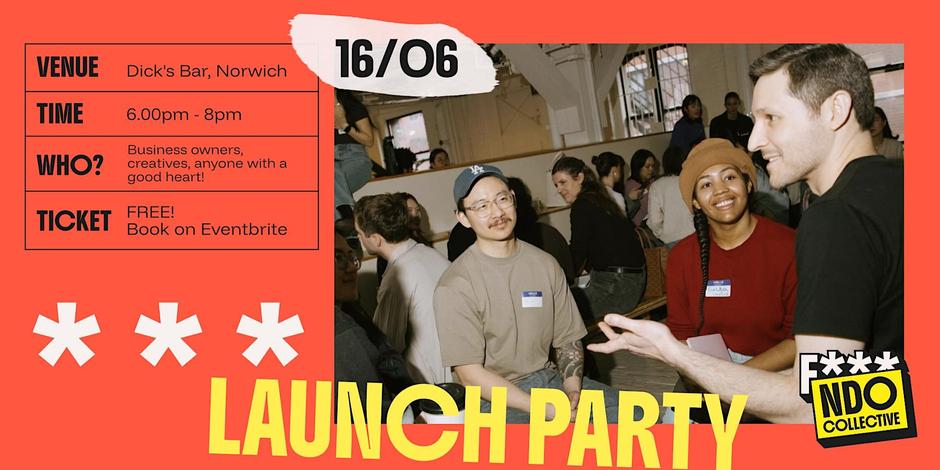
FNDO Networking Event for Business Owners & Creatives - Launch Party!
An inaugural networking gathering from FNDO Collective, fostering genuine connections among independent professionals. Rather than traditional pitch-focused formats, the event emphasises real conversations, good vibes, and a goodie bag. Includes a 30-minute introduction to FNDO Collective's mission and a brief feedback session to shape future community direction.Designed for creatives, freelancers, and small business owners who find conventional networking events unappealing or exhausting. Spots are limited.

Speaking
Beyond the Code: Designing Services That Stand the Test of Time
As software engineers, it's easy to get lost in the excitement of implementing clever business logic: the algorithms, the workflows, the elegant domain models. But the success (or failure) of a service rarely hinges on its core logic alone. What really separates a fragile prototype from a resilient, scalable system is everything that happens around that logic: the invisible scaffolding that shapes how a service behaves, communicates, and recovers when things go wrong.In this session I'll explore the often-overlooked aspects of building robust services. The decisions that make the difference between smooth operations and painful refactors months down the line. I'll unpack how thoughtful design choices early on can pay dividends in maintainability, observability, and security later. Whether you're building your first microservice or managing an ecosystem of services, you'll leave with practical ideas for designing services.Key Takeaways:
- Why the non-domain aspects of a service are often what determine its long-term success
- How to think holistically about design, structure, and reliability
- Strategies for evolving your services without introducing chaos

Attending
Modern Data Lakehouse / Apache Iceberg - From Strategy to Hands-On
A full-day immersive event exploring Apache Iceberg and modern lakehouse architecture on AWS. Morning sessions cover strategy and architecture for technical decision makers, including keynotes on data readiness for AI, intelligent lakehouse architecture, and Iceberg adoption patterns. Afternoon hands-on labs guide data engineers through building an end-to-end Iceberg lakehouse from real-time ingestion to ML-ready analytics.

Speaking
Beyond the Code: Designing Services That Stand the Test of Time - Part 1
As software engineers, it's easy to get lost in the excitement of implementing clever business logic: the algorithms, the workflows, the elegant domain models. But the success (or failure) of a service rarely hinges on its core logic alone. What really separates a fragile prototype from a resilient, scalable system is everything that happens around that logic: the invisible scaffolding that shapes how a service behaves, communicates, and recovers when things go wrong.In this session I'll explore the often-overlooked aspects of building robust services. The decisions that make the difference between smooth operations and painful refactors months down the line. I'll unpack how thoughtful design choices early on can pay dividends in maintainability, observability, and security later. Whether you're building your first microservice or managing an ecosystem of services, you'll leave with practical ideas for designing services.Key Takeaways:
- Why the non-domain aspects of a service are often what determine its long-term success
- How to think holistically about design, structure, and reliability
- Strategies for evolving your services without introducing chaos
Hosting
Context switching and how to survive it, with Emily Delva
Context switching is unavoidable in the tech industry, but unmanaged it quietly destroys focus, productivity, and decision quality across teams (as well as morale!).
This talk breaks down the real cost of constant interruptions and gives practical, tested strategies to protect deep work, structure workflows, and stay effective in high-interruption environments. Also we’ll learn how to say “no” more.
Not everyone’s brain is the same, and this is taken into account when providing new habit suggestions.
This talk breaks down the real cost of constant interruptions and gives practical, tested strategies to protect deep work, structure workflows, and stay effective in high-interruption environments. Also we’ll learn how to say “no” more.
Not everyone’s brain is the same, and this is taken into account when providing new habit suggestions.
Hosting
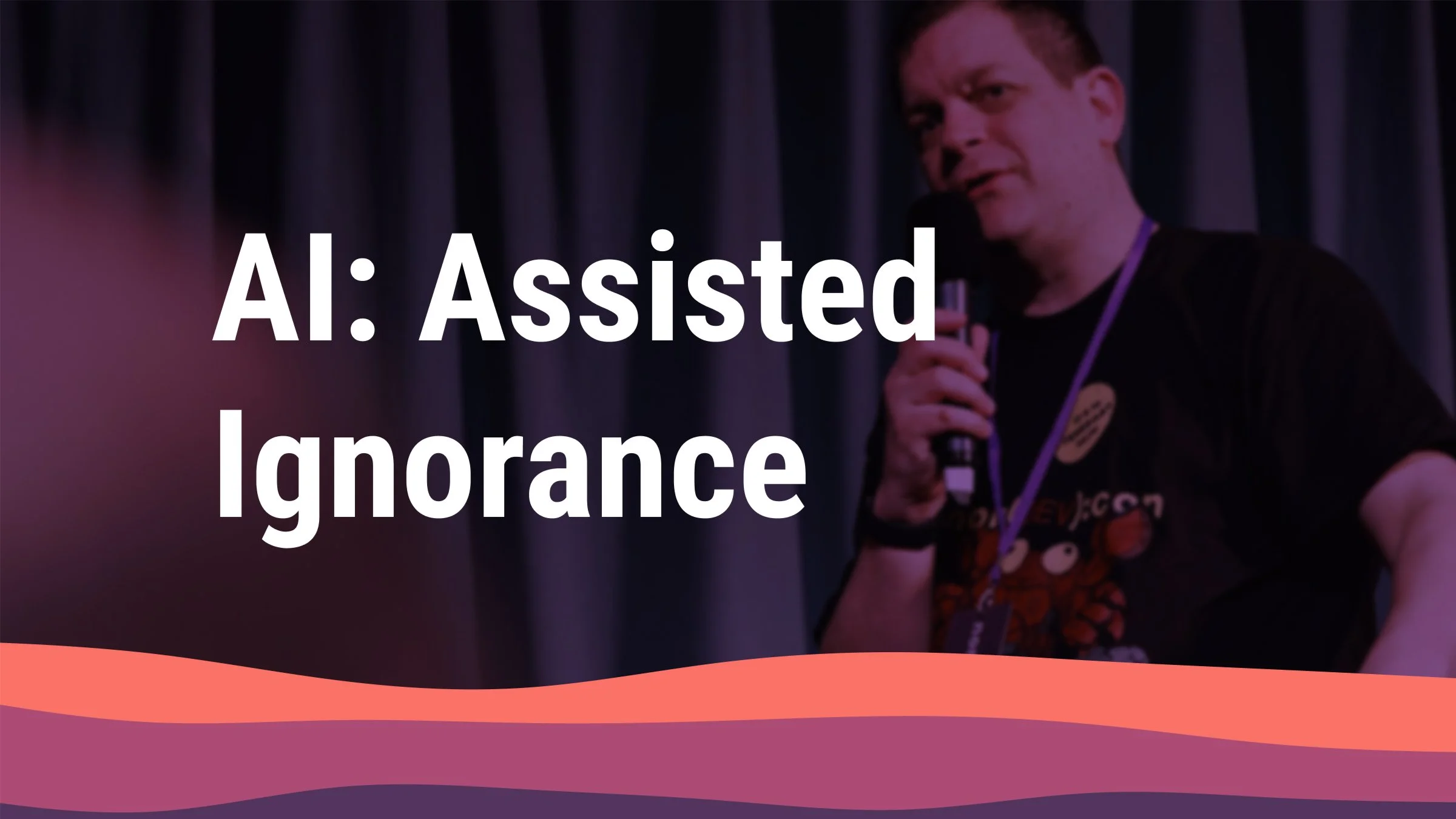
AI: Assisted Ignorance with Dom Davis (Online)
What is AI actually doing to our industry? Rather than assuming AI removes the need for human developers, Dom questions whether these tools truly deliver on their promises or contribute to professional exhaustion. This talk examines the reality of AI in software development, and the very real dangers it poses.Dom DavisDom is a developer and DevOps professional based in Norfolk with decades of coding experience. He's known for combining sarcasm and humour when discussing complex technical topics.

Attending
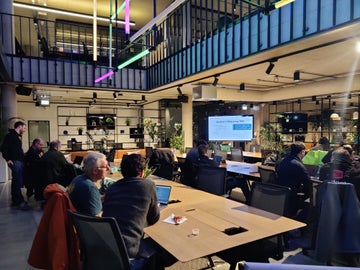
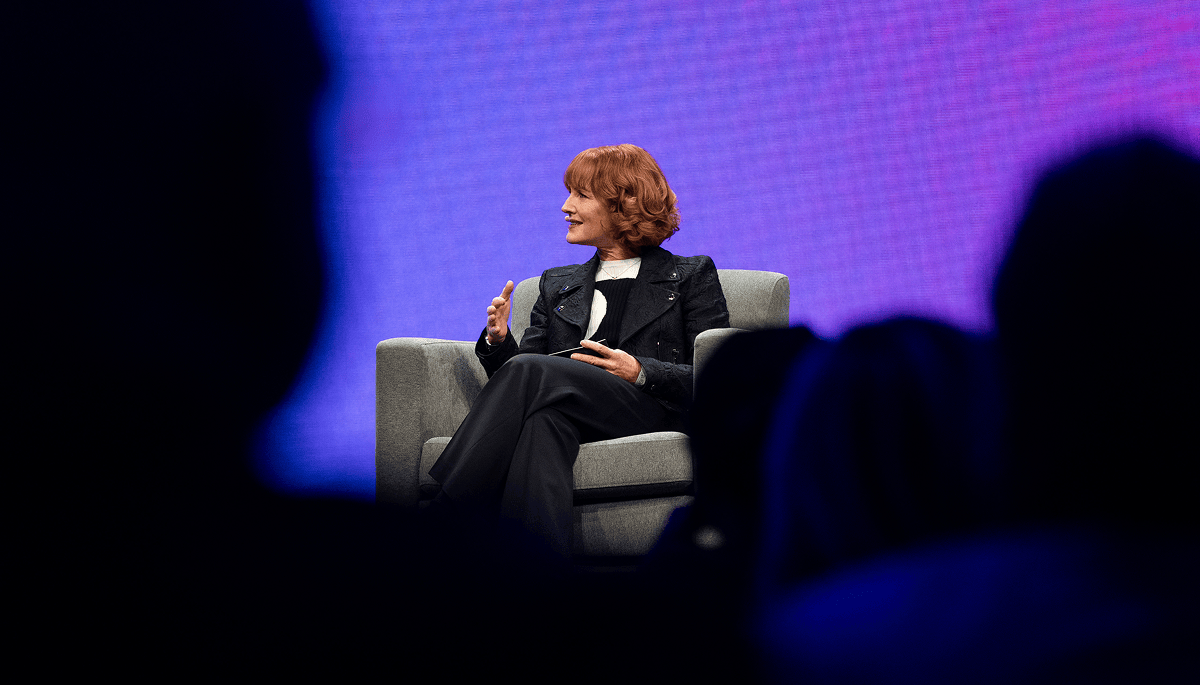
The London Tech Leaders Engineering Summit 2026
A summit exploring contemporary engineering leadership challenges through keynotes, panel discussions, and workshops. Key topics include rethinking the software development lifecycle in an AI-driven era, and infrastructure trade-offs between digital sovereignty and scale.
Speaking
The Future of Technology in Travel & Leisure
An executive lunch and industry roundtable hosted by One Beyond, bringing together senior technology and digital leaders from across the travel and leisure sector.
Speaking
Beyond the Code: Designing Services That Stand the Test of Time
As software engineers, it's easy to get lost in the excitement of implementing clever business logic: the algorithms, the workflows, the elegant domain models. But the success (or failure) of a service rarely hinges on its core logic alone. What really separates a fragile prototype from a resilient, scalable system is everything that happens around that logic: the invisible scaffolding that shapes how a service behaves, communicates, and recovers when things go wrong.In this session I'll explore the often-overlooked aspects of building robust services. The decisions that make the difference between smooth operations and painful refactors months down the line. I'll unpack how thoughtful design choices early on can pay dividends in maintainability, observability, and security later. Whether you're building your first microservice or managing an ecosystem of services, you'll leave with practical ideas for designing services.Key Takeaways:
- Why the non-domain aspects of a service are often what determine its long-term success
- How to think holistically about design, structure, and reliability
- Strategies for evolving your services without introducing chaos
Hosting
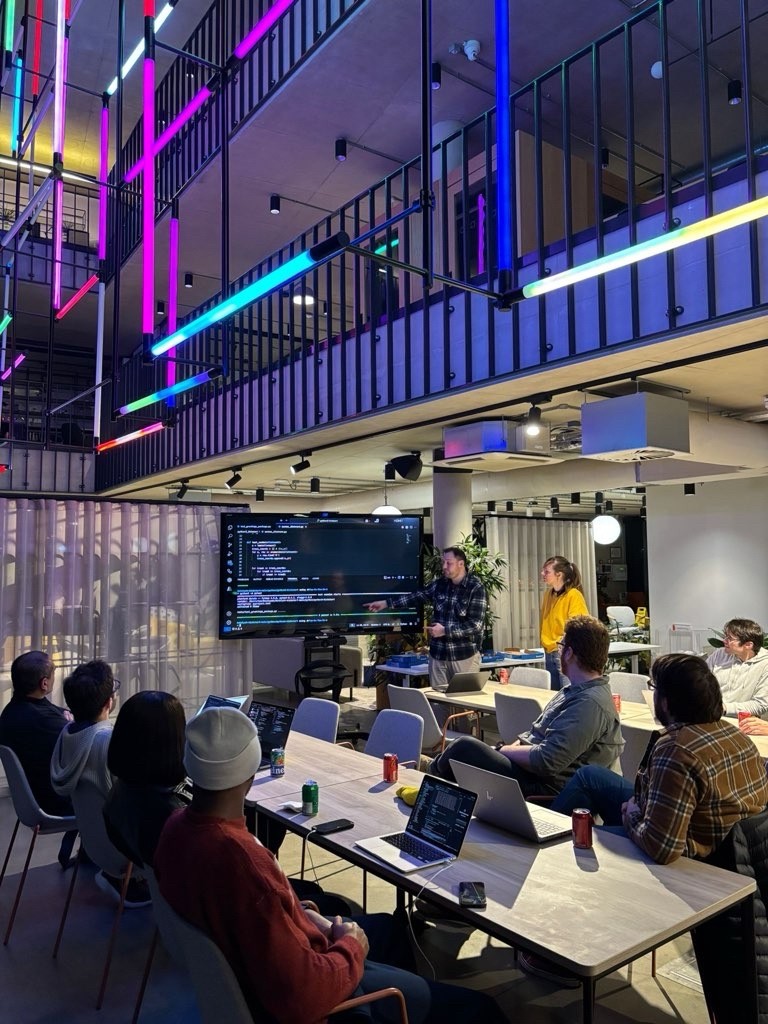
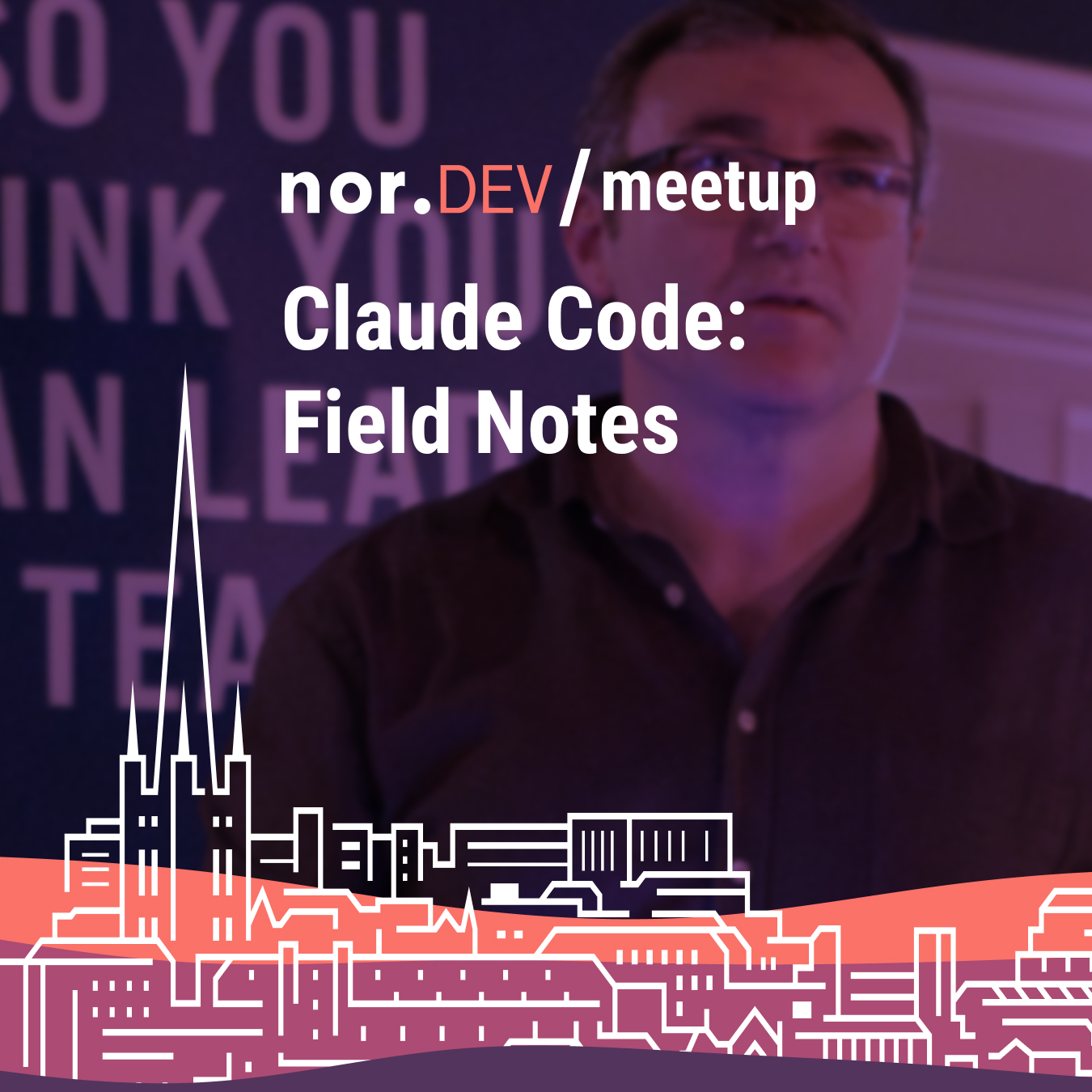
Claude Code: Field Notes with Steve Cresswell
Claude Code is changing the way many of us write software, but the experience is uneven. Some developers report dramatic gains in productivity, while others find it underwhelming and even dangerous. Much of the difference appears to come down to how the tools are used and how development workflows adapt around them.In this talk Steve Cresswell will share practical field notes from using Claude Code in day-to-day development, covering local setup, supporting tools, and the workflows that make the interaction with Claude productive rather than chaotic. He will also discuss how requirements and documentation influence outcomes, how to steer or constrain the model when necessary, and how these approaches begin to scale beyond an individual developer into team usage.Steve CresswellStephen Cresswell is Head of Engineering at Haven, the UK's largest holiday park operator, where he leads teams responsible for building and operating the digital systems that power the company's sales and booking platforms. He has over twenty-five years' experience in software engineering across sectors including utilities, insurance, media and education. His career spans roles from graduate developer to CTO and co-founder of the consultancy GuideSmiths. Stephen holds a first-class honours degree in Computer Science and an MBA from the Open University. He contributes to a number of open source projects, including several widely used Node.js libraries such as amqplib and Rascal.Steve's LinkedIn
Speaking
So you think you can lead a team? - Revisited
Software engineering is hard, and leading a team as an engineer can be even harder. Many of us feel more comfortable writing code than working with people, and we often believe our value lies solely in our technical output. But when you step into team leading, the balance shifts: there are more people than code, and your value changes and, often, grows.Over the last 25 years I was dropped into team leading several times without warning, but three and a half years ago I chose to do it deliberately. It still took more than a year before I realised I was only just beginning to understand what leading a software team really involves.This revised and updated version of my talk - now expanded to better reflect the ideas in my book So You Think You Can Lead a Team? - shares the highs, lows, surprises, and lessons learned along the way. I can't promise a magic formula (I'm still learning every day), but I hope to help you avoid some of the mistakes I made and find your own path to becoming a better team lead.
![[nor(DEV):con] Leadership: Carrots, Sticks, and Slack Panel](/img/audience-f817e8b7.jpg)
Speaking
[nor(DEV):con] Leadership: Carrots, Sticks, and Slack Panel
What truly separates a ‘good’ leader from a ‘great’ one? Join our panel as we consider the realities of leading modern software teams in a world that has gone hybrid. We will talk about the technical and cultural hurdles of managing remote developers and how to keep your team happy when high-salary remote roles are just a click away.Furthermore, we want to get practical about the human side of the job: how do you challenge someone to grow while making sure they feel valued? Whether you are just stepping into management or you have been leading for years, come along for some honest conversation and good vibes. Let’s consider how we build loyal, high-performing teams together.
Speaking
[nor(DEV):con] Beyond the Code: Designing Services That Stand the Test of Time
As software engineers, it's easy to get lost in the excitement of implementing clever business logic: the algorithms, the workflows, the elegant domain models. But the success (or failure) of a service rarely hinges on its core logic alone. What really separates a fragile prototype from a resilient, scalable system is everything that happens around that logic: the invisible scaffolding that shapes how a service behaves, communicates, and recovers when things go wrong.In this session I'll explore the often-overlooked aspects of building robust services. The decisions that make the difference between smooth operations and painful refactors months down the line. I'll unpack how thoughtful design choices early on can pay dividends in maintainability, observability, and security later. Whether you're building your first microservice or managing an ecosystem of services, you'll leave with practical ideas for designing services.Key Takeaways:
- Why the non-domain aspects of a service are often what determine its long-term success
- How to think holistically about design, structure, and reliability
- Strategies for evolving your services without introducing chaos
Speaking
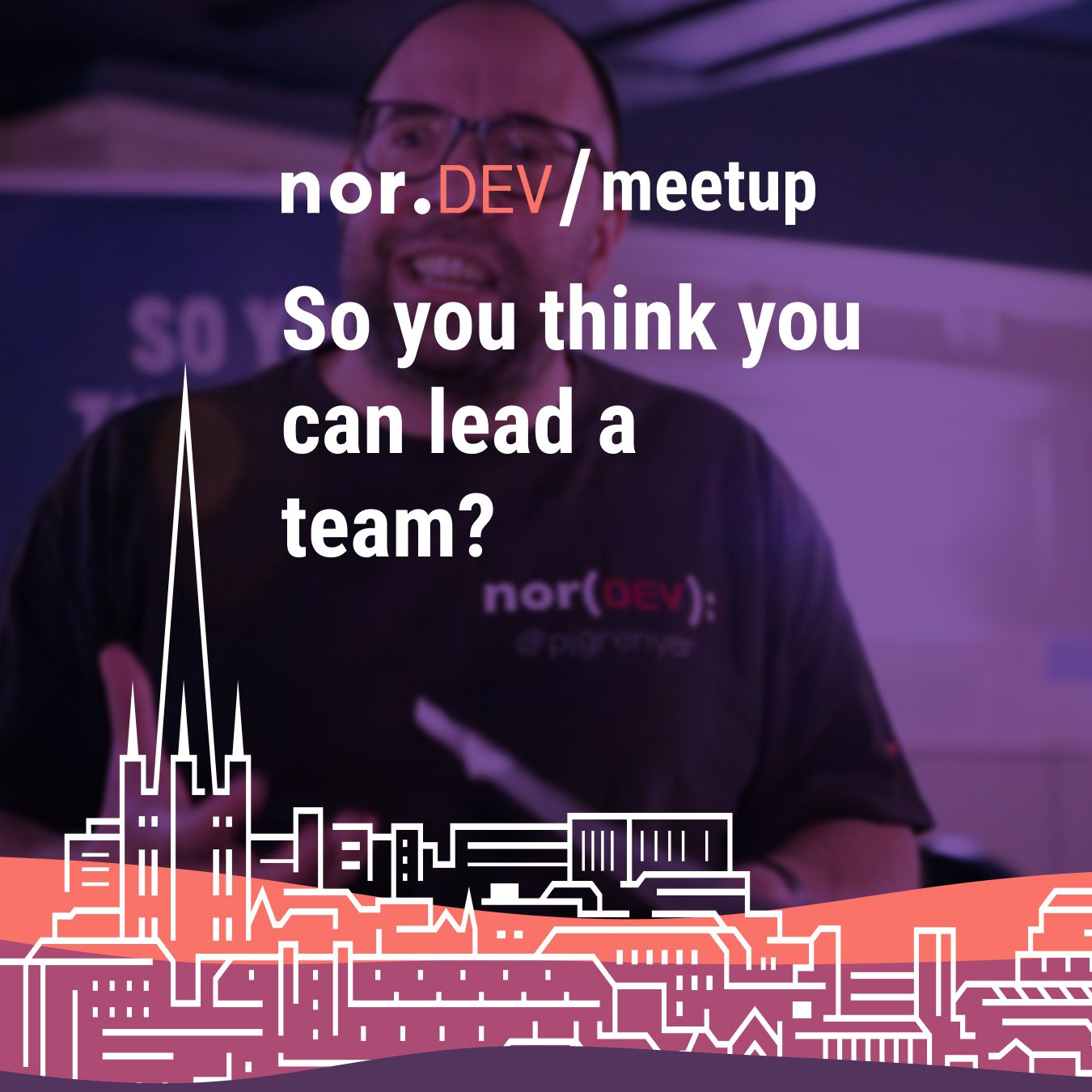
So you think you can lead a team? - Revisited
Software engineering is hard, and leading a team as an engineer can be even harder. Many of us feel more comfortable writing code than working with people, and we often believe our value lies solely in our technical output. But when you step into team leading, the balance shifts: there are more people than code, and your value changes and, often, grows.Over the last 25 years I was dropped into team leading several times without warning, but three and a half years ago I chose to do it deliberately. It still took more than a year before I realised I was only just beginning to understand what leading a software team really involves.This revised and updated version of my talk - now expanded to better reflect the ideas in my book So You Think You Can Lead a Team? - shares the highs, lows, surprises, and lessons learned along the way. I can't promise a magic formula (I'm still learning every day), but I hope to help you avoid some of the mistakes I made and find your own path to becoming a better team lead.
Speaking
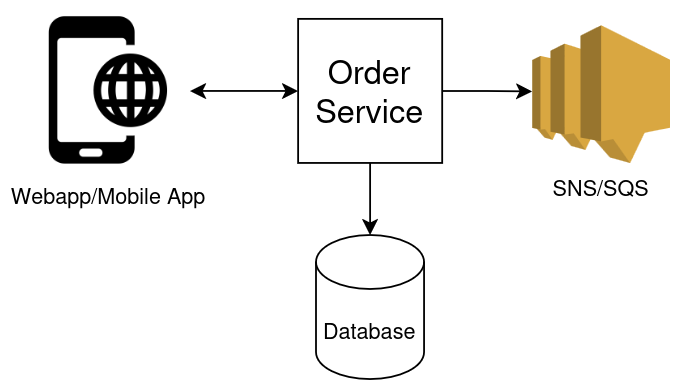
Beyond the Code: Designing Services That Stand the Test of Time
As software engineers, it's easy to get lost in the excitement of implementing clever business logic: the algorithms, the workflows, the elegant domain models. But the success (or failure) of a service rarely hinges on its core logic alone. What really separates a fragile prototype from a resilient, scalable system is everything that happens around that logic: the invisible scaffolding that shapes how a service behaves, communicates, and recovers when things go wrong.In this session I'll explore the often-overlooked aspects of building robust services. The decisions that make the difference between smooth operations and painful refactors months down the line. I'll unpack how thoughtful design choices early on can pay dividends in maintainability, observability, and security later. Whether you're building your first microservice or managing an ecosystem of services, you'll leave with practical ideas for designing services.Key Takeaways:
- Why the non-domain aspects of a service are often what determine its long-term success
- How to think holistically about design, structure, and reliability
- Strategies for evolving your services without introducing chaos
Speaking
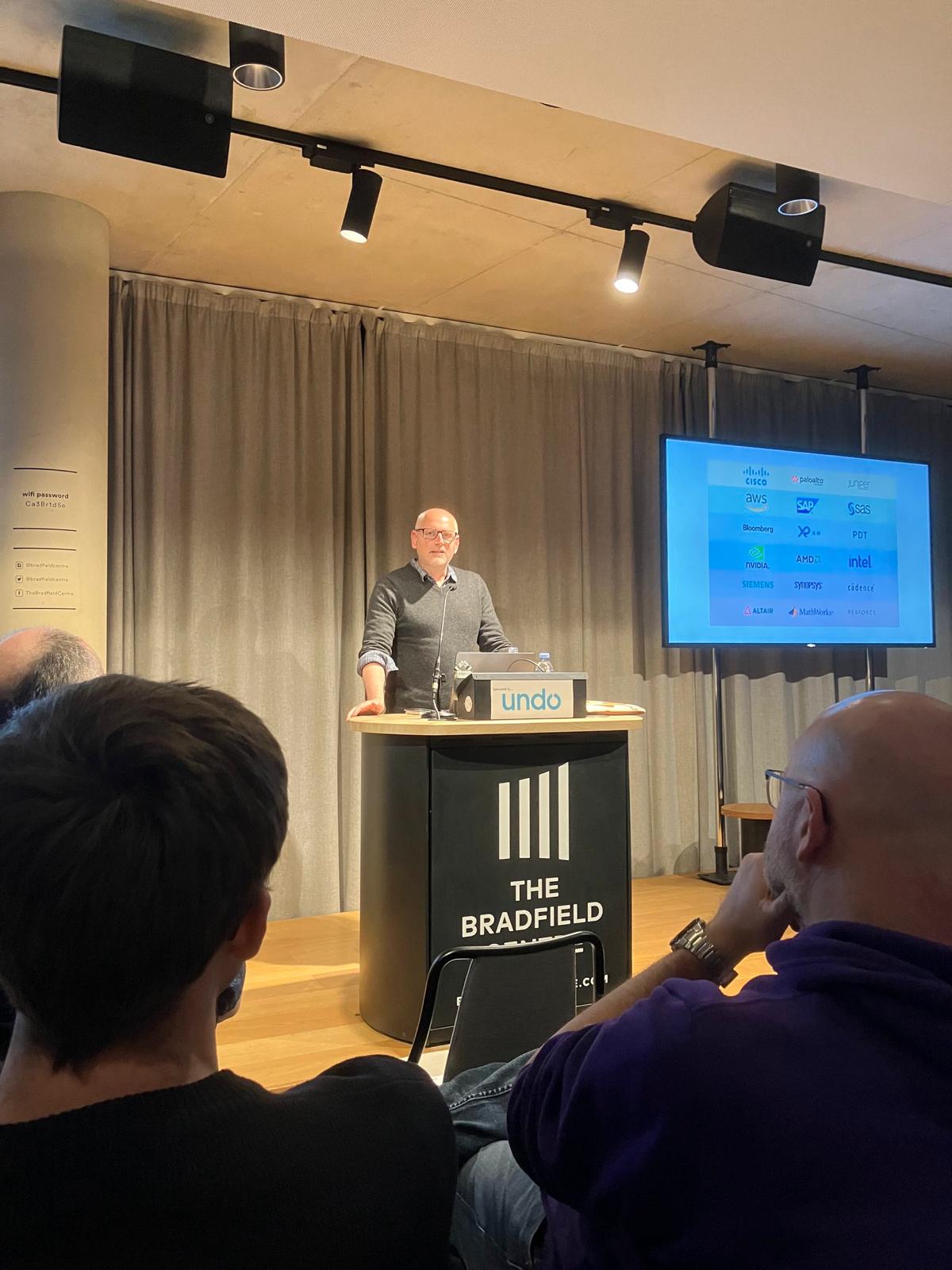
ACCU Cambridge: So you think you can lead a team? & From Zero to Deployed - Double Header
A double-header evening with two talks by Paul Grenyer.18:30 - So you think you can lead a team?This presentation explores the challenges engineers face when transitioning to team leadership roles. Drawing from 25 years of career progression, Paul shares lessons about shifting from code-focused work to people management, covering both successes and mistakes encountered over time.19:45 - From Zero to Deployed: Building & Shipping an AWS Lambda with TypeScript, Terraform & GitHub ActionsA practical demonstration on building serverless functions using AWS Lambda with TypeScript, Terraform, and GitHub Actions. Topics include writing Lambda functions, provisioning infrastructure through code, automating deployments, and lessons from serverless implementations.Free pizza and beer provided, with book signing available.